
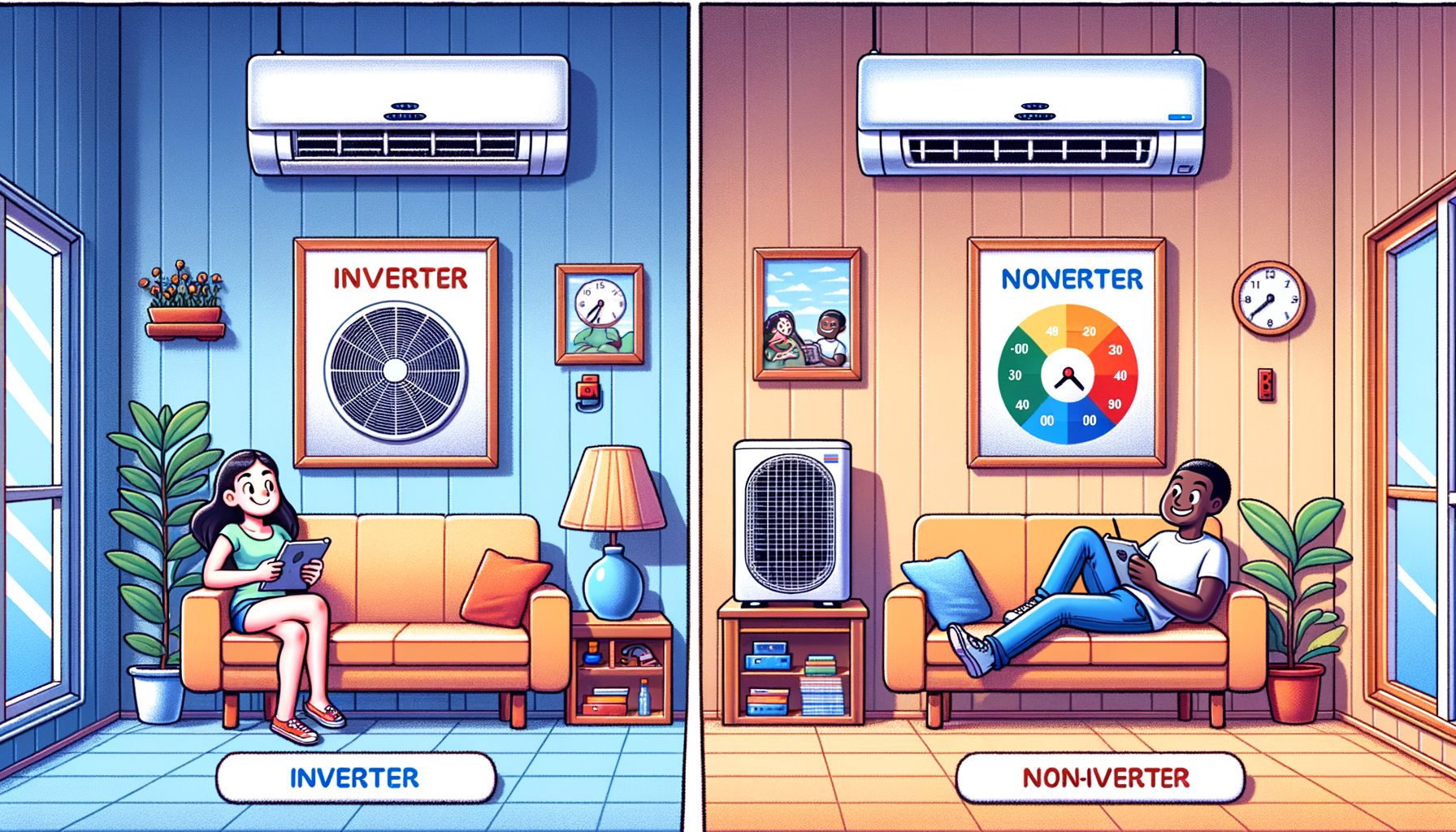
Struggling to decode the difference between inverter and non-inverter AC for your home or office? You’re not alone. As summers intensify and energy prices climb, picking the right unit can be the difference between cool comfort and monthly bill shock. What follows is a clear, practical guide that explains how each type works, what you really save, and when it makes sense to invest more upfront. Stick around for simple math, real-world tips, and a no-fluff checklist you can use before you buy.
What’s the real difference—and why it matters to your wallet and comfort
The key distinction comes down to how the compressor runs. With a non-inverter (often called “fixed-speed”) AC, the compressor snaps fully on and then off to reach your set temperature. It blasts cold air, overshoots a bit, then shuts off. Once the room warms up again, it restarts at full power. That cycle repeats. An inverter AC uses a variable-speed compressor. Instead of a simple on/off routine, it speeds up or slows down to match the cooling (or heating, with heat pump models) you need in real time. After your set temperature is reached, it gently maintains it—no harsh stops or spikes.
Why this matters: energy, comfort, and noise. The on/off cycle of non-inverter units causes current surges and wastes energy during restarts, which can add up on your power bill. Electricity use is typically cut by about 20–40% with inverter units under normal, mixed-climate use, thanks to speed modulation (actual savings depend on sizing, insulation, and habits). That modulation also keeps the room temperature more stable (fewer hot-cold swings) and generally makes the system quieter—both indoors and outdoors. If you’ve ever felt uncomfortably chilly under a blasting AC or noticed a “stop–start” hum, that’s classic non-inverter behavior.
Cost is the other big factor. Non-inverter ACs are cheaper upfront, which is why they’re still popular for small rooms, short daily usage, or rental properties. But when you run AC for several hours a day during long summers—or year-round in tropical regions—the ongoing energy savings from an inverter AC often outweigh the higher purchase price. In many cases, the payback period lands within one to two cooling seasons. Planning to stay put and use AC regularly? Inverters tend to hit the “comfort and cost” sweet spot.
Inside the technology: how inverter and non-inverter compressors work
A non-inverter AC operates like a light switch: the compressor is either 100% on or 0% off. When the thermostat senses the room is warmer than your setpoint (say, 24°C), it kicks the compressor on at full blast. Once the temperature dips below the target, it shuts off. That pattern creates temperature waves: cool, then slightly warm, then cool again. It also draws a big inrush of current at every start, which can stress wiring and generators, and may briefly dim lights in older buildings.
An inverter AC uses electronics (a variable frequency drive) to adjust the compressor’s motor speed. When the room is far from the setpoint, it speeds up to pull down temperature quickly. As it approaches the setpoint, it slows to a low, steady speed that maintains comfort without overcooling. From that come four practical benefits: smoother temperature, lower average energy use, quieter operation, and “soft starts” that are kinder to your electrical system. In colder climates, many inverter models are heat pumps, reversing the refrigeration cycle to provide efficient heating—sometimes even at sub-zero temperatures—by modulating compressor speed to match heat loss.
Picture a common scenario: a 20–25 m² bedroom set to 24–25°C, used 7–9 hours nightly. A non-inverter will likely cycle on and off several times an hour. During “on” periods, it draws near its rated power; during “off,” it draws very little. An inverter, meanwhile, may ramp to near full speed for the first 10–20 minutes, then settle at 30–60% capacity for the rest of the night. The result is a lower average power draw. If you’re sensitive to noise or drafts, you’ll notice the inverter’s steady, low-level airflow feels more natural. That’s part of why efficiency labels like SEER/EER or seasonal performance metrics (which you can learn more about from ENERGY STAR and national agencies) often favor inverter designs. For background, see ENERGY STAR’s overview of air conditioners (https://www.energystar.gov/products/heating_cooling/air_conditioning) and the U.S. Department of Energy’s guide to room AC (https://www.energy.gov/energysaver/room-air-conditioners).
Energy use, costs, and payback—simple math you can trust
Let’s do a quick, realistic comparison using a 1-ton (≈12,000 BTU/h) split AC in a warm climate. Exact numbers vary with room size, insulation, outdoor temperature, and your habits. Even so, the pattern is consistent worldwide: inverter ACs use less energy over time in moderate to heavy use.
Assumptions:
– Daily use: 8 hours
– Electricity price: $0.15 per kWh (adjust to your local rate)
– Average power draw (not the maximum): 1.4 kW for a non-inverter; 0.9 kW for an inverter of similar capacity (typical when correctly sized and used in steady conditions)
Monthly operating cost (30 days):
| Scenario | Avg. Power (kW) | Daily Hours | Monthly kWh | Monthly Cost @ $0.15/kWh |
|---|---|---|---|---|
| Non-Inverter AC | 1.4 | 8 | 1.4 × 8 × 30 = 336 | $50.40 |
| Inverter AC | 0.9 | 8 | 0.9 × 8 × 30 = 216 | $32.40 |
Estimated savings: 336 − 216 = 120 kWh per month, or about $18/month at $0.15/kWh. If an inverter model costs $200 more upfront, the simple payback is roughly 11 months in this scenario. In hotter regions, longer daily use, or higher tariffs, payback can be even faster. In cooler climates or light use (say, 1–2 hours/day), payback stretches, and a non-inverter might be acceptable if budget is tight.
Two extra notes to keep your math honest:
– Correct sizing is critical. An oversized non-inverter short-cycles more (wasting energy and reducing comfort). An oversized inverter still wastes potential, though less dramatically. Right-size using reputable calculators or local guidelines.
– Seasonal performance ratings matter. Higher SEER (or EER/CSPF/SCOP depending on your country) typically means lower bills. Check your local energy label—like ENERGY STAR in the U.S., the EU Energy Label, or India’s BEE star rating (https://beeindia.gov.in/labels).
For a broader look at cooling demand’s global impact and the role of efficient ACs, see the International Energy Agency’s report “The Future of Cooling” (https://www.iea.org/reports/the-future-of-cooling).
Comfort, noise, durability, climate fit, and practical buying tips
Comfort is more than just a number on the remote. Inverter ACs minimize temperature swings, which feels better on skin and reduces that “too cold” sensation near vents. They also tend to be quieter during steady operation because the compressor and fans ramp down after the initial cool-down. Typical indoor sound levels can drop into the 19–30 dB(A) range for many premium inverter split units at low fan speeds—library quiet—while non-inverters often run louder during each full-power cycle. Outdoors, inverters avoid repeated high-decibel starts that can annoy neighbors at night.
Durability depends on build quality, design, and maintenance. Non-inverter units are simpler, which some people equate with reliability. That said, frequent on/off cycling can be tough on compressors and contactors over years of use. Inverter systems add electronics (power modules and control boards) that must be protected from heat, moisture, and power surges. Good brands engineer for these risks, and many models include surge protection and conformal-coated boards. In areas with unstable grids, a voltage stabilizer or UPS designed for ACs should be considered, and manufacturer guidance should be followed.
Climate fit matters. In very hot, humid regions, the inverter’s ability to modulate allows better moisture control and steady comfort at setpoints like 24–26°C. In cold climates, inverter heat pump models deliver efficient heating compared with resistance heaters or older systems, though extreme cold performance varies by model (check the low-ambient temperature rating). If you plan to use the unit for heating, look for cold-climate specs or enhanced vapor injection models. If you only cool a few days per year, budget non-inverters can still be reasonable.
Buying and setup checklist:
– Sizing: Match capacity to room area and insulation. Oversizing kills efficiency and comfort. Ask for a load calculation if possible.
– Efficiency labels: Compare SEER/EER/CSPF/SCOP across similar capacities. Higher is usually better—but balance with price.
– Refrigerant: R32 or newer low-GWP refrigerants are common and efficient. Proper installation and leak checks are essential for safety and performance.
– Noise and airflow: Check dB(A) ratings and look for multi-speed or inverter fans. Quiet modes help at night.
– Smart features: Wi‑Fi control, scheduling, and geo-fencing can save energy.
– Install quality: Get a certified installer. Correct refrigerant charge, vacuuming, and piping practices make a big difference.
– Maintenance: Clean filters monthly in dusty areas. Service coils and check refrigerant by a pro at least annually.
Conclusion
Here’s the bottom line: inverter ACs adjust compressor speed to meet your cooling needs in real time, delivering steadier comfort, lower noise, and significantly lower energy use under typical daily operation. Non-inverter ACs run full power on and off, which can mean wider temperature swings, higher average power draw, and more frequent electrical surges. If you use AC for several hours a day or live in a long, hot season, an inverter unit often pays for itself within a year or two through energy savings. If your use is truly occasional or your budget is very tight, a non-inverter can still be a practical stopgap—just size it right and manage expectations.
Before you buy, take 10 minutes to run the numbers: estimate your daily hours, check your local electricity rate, and compare two or three models with their efficiency ratings. If you’re leaning inverter (most regular users should), shortlist units with strong efficiency labels, quiet operation, and a reputable installer. Small choices—like setting your thermostat to 24–26°C, using sleep mode, and cleaning filters—compound into real savings and better sleep.
Ready to act? Measure your room, check your breaker capacity, and request quotes for two inverter models and one non-inverter as a baseline. Ask each vendor for expected kWh per month at your usage pattern. Pick the one that balances comfort, cost, and reliability—not just the cheapest sticker price. The sooner you switch to an efficient setup, the sooner you’ll feel the difference in both comfort and your power bill. Stay cool, stay smart, and let your next bill be the proof. If you had to choose today, which matters most to you: lowest upfront price, or lowest total cost over the next three summers?
Q&A: Common questions
Q1: Is an inverter AC always cheaper to run?
A: In most real-world scenarios with daily use, yes. By modulating compressor speed, it lowers average power draw. Light or occasional use narrows the gap, but an inverter still tends to win on comfort and noise.
Q2: Can a non-inverter ever be the better choice?
A: If you use AC rarely (e.g., a few days per month), have a very tight budget, or need a quick replacement in a rental, a non-inverter can be acceptable—provided it’s correctly sized and installed.
Q3: Do inverter ACs require special maintenance?
A: Routine tasks are the same: clean filters, keep coils clean, ensure proper drainage. Electronics should be protected from power surges in unstable grids. Annual professional service is recommended for all ACs.
Q4: Will an inverter AC work with a generator or solar?
A: Yes—often better, thanks to soft-start behavior and lower peak demand. Ensure your generator/inverter is sized for the unit’s maximum load and consult an electrician for compatibility.
Q5: How long do these units last?
A: With proper installation and maintenance, 8–12 years is common for both types. In heavy-use scenarios, inverters may outlast non-inverters because hard starts are reduced, but quality and maintenance matter most.
Sources
ENERGY STAR: Air Conditioners — https://www.energystar.gov/products/heating_cooling/air_conditioning
U.S. Department of Energy: Room Air Conditioners — https://www.energy.gov/energysaver/room-air-conditioners
International Energy Agency: The Future of Cooling — https://www.iea.org/reports/the-future-of-cooling
Bureau of Energy Efficiency (India): Star Rating Program — https://beeindia.gov.in/labels