
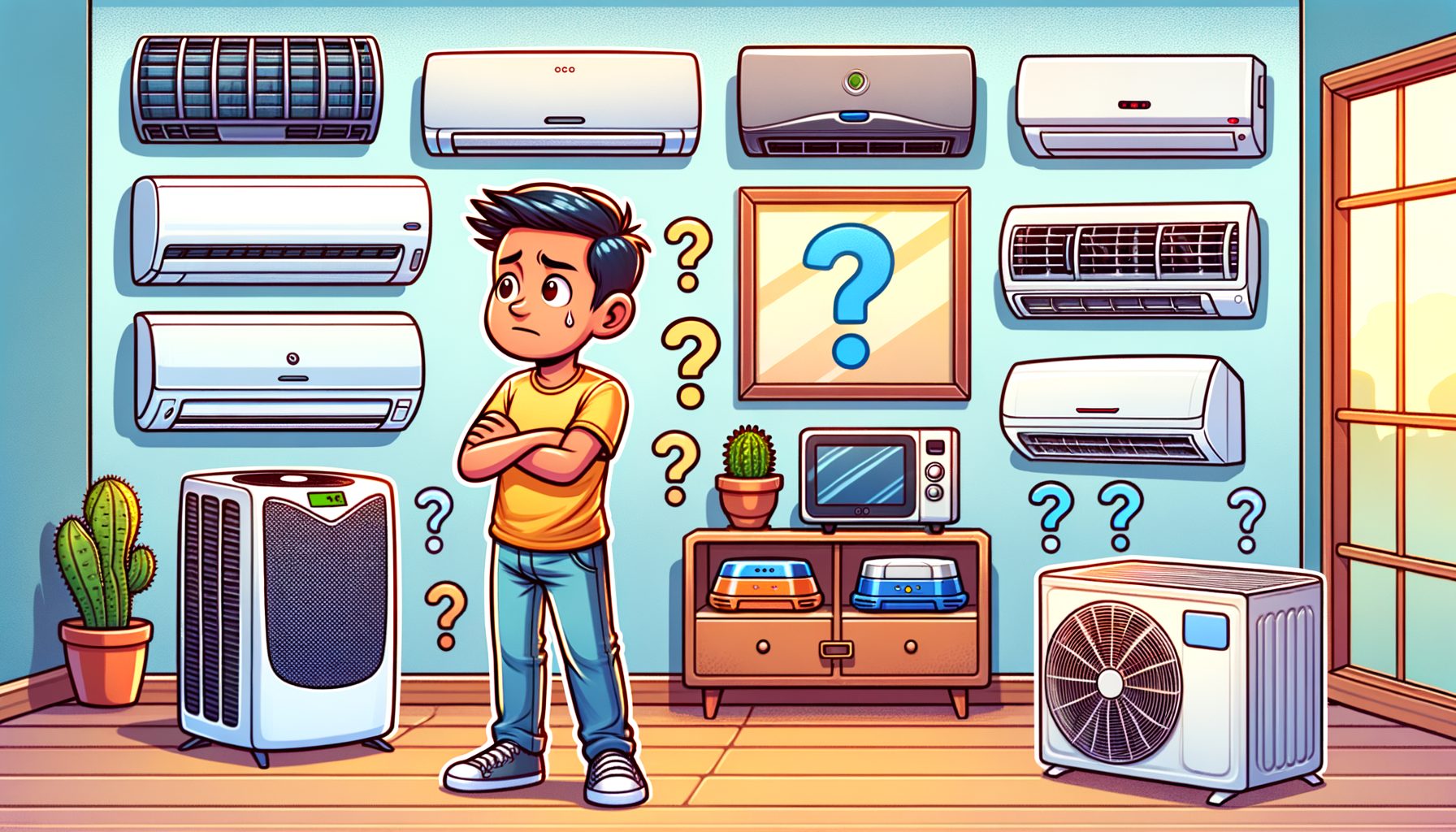
Hot, tired, and surrounded by models that all promise to be “the most efficient”? The real challenge is choosing an air conditioner that fits your space without burning cash or kilowatts. In a beginner-friendly walkthrough, you’ll see exactly what to look for—types, sizes, efficiency ratings, features, and total costs—so your choice feels confident and future-proof. If you’ve ever wondered how to pick the best AC and dodge common mistakes, consider this a clear, step-by-step path.
The Real Problem: Overheating Homes, High Bills, and Too Many Options
Across the world, heat waves are growing more frequent and intense. Homes that felt “fine” a few summers back now seem stuffy, humid, and exhausting. Many people rush-buy based on price or a quick tip, then end up with a unit that’s undersized (never cools the room), oversized (short-cycles and leaves air humid), or just too loud to live with. Cue higher bills, poor sleep, and ongoing frustration.
At the center sit three issues. First, sizing gets misunderstood. “Bigger cools faster” sounds right, yet an oversized unit drops temperature quickly without removing enough humidity, leaving rooms clammy and even increasing mold risk in some climates. Second, efficiency labels—SEER2, EER, Energy Star—can feel like alphabet soup, and without context it’s hard to connect ratings to monthly costs. Third, installation and maintenance often get overlooked; a sloppy install or a dirty filter saps capacity, wastes electricity, and can fling allergens back into the room.
Choosing among types adds pressure: window, portable, split (ducted or ductless mini‑split), plus smart add‑ons. Each path trades off efficiency, flexibility, and price. We break those differences down in plain language with realistic examples. You’ll learn how to measure your room and match BTUs, how ratings affect your bill, which features matter in real life (noise levels, inverter tech), and how to plan for installation and maintenance.
If you want a plan that balances budget, comfort, and long‑term savings, you’ve found it. By the end, you’ll know how to choose the best air conditioner for your space, climate, and lifestyle—without guesswork. Consider it your roadmap.
Know Your Options: Window, Portable, Split, and Ductless Mini‑Split Units
Before buying, decide which category suits your home and constraints. Each type behaves differently in efficiency, noise, aesthetics, and cost.
Window ACs serve as a classic pick for apartments and single rooms. Upfront costs are usually lowest, and they’re often more efficient than portables because heat exhausts directly outside. Installation tends to be straightforward if your window is compatible. The trade-off: a partially blocked view and added weight on the frame. For renters or students, a modern Energy Star‑certified window unit often delivers the best value per dollar.
Portable ACs provide the “plug‑and‑cool” experience. Mobility is the appeal: roll it, plug it in, attach the window kit, and go—handy when windows can’t support a traditional unit. However, single‑hose models pull warm air from the rest of the home, hurting efficiency. Dual‑hose units perform better yet still use more energy than similarly rated window units, and they’re typically louder because the compressor sits in the room.
Split systems arrive in two forms: ducted central air for larger homes and ductless mini‑splits (indoor wall or ceiling units paired with an outdoor compressor). Ductless mini‑splits are among the most efficient for room‑by‑room cooling and whisper‑quiet indoors because the compressor lives outside. Precise temperature control and zoning are easy—cool the living room without freezing the bedroom. Installation costs more and needs a qualified technician, but total cost of ownership can beat running multiple portables or window units for years.
Smart ACs or smart controllers layer in scheduling, geofencing, and energy monitoring, either built-in (Wi‑Fi models) or with add-ons (smart plugs, infrared controllers). These features cut waste when you’re away. For instance, geofencing can pre‑cool as you drive home while avoiding hours of idle operation. Then this: pick a model that works with your ecosystem (Google Home, Apple Home, Amazon Alexa).
In general: for the lowest upfront cost in a single room, choose a modern window AC. If a window unit isn’t possible and mobility matters, go with a dual‑hose portable. For long‑term efficiency, quiet operation, and potential heating, a ductless mini‑split with inverter technology is hard to beat. For broader comparisons and certifications, see ENERGY STAR’s room AC guidance and U.S. Energy Saver on room ACs.
Size and Efficiency: Getting BTUs, SEER2, and Inverter Tech Right
Right‑sizing matters most. Air conditioners are rated in BTU/h or tons (1 ton = 12,000 BTU/h). As a quick rule, estimate 20 BTU per square foot (215 BTU per square meter). Adjust upward for high sun exposure, tall ceilings, many occupants, or heat‑heavy appliances. Adjust downward for shaded rooms or super‑insulated spaces.
Why avoid oversizing? Because an oversized unit cools fast but short‑cycles, which wastes energy, reduces dehumidification, and accelerates wear. In humid regions, you’ll feel sticky even when the thermostat looks “cool.” In dry climates, oversizing still erodes comfort and efficiency. The sweet spot is steady operation that maintains setpoint without constant starts and stops.
Efficiency ratings translate into real money. For central systems and mini‑splits, SEER2 measures seasonal performance across varied conditions; higher is better. For room units, you’ll see EER or CEER (Combined Energy Efficiency Ratio). In practical terms, stepping from SEER2 14 to SEER2 20 can trim cooling energy by roughly 20–30% in typical use, though climate and habits matter. Inverter technology—allowing the compressor to modulate speed instead of slamming on/off—boosts comfort and efficiency, especially in mini‑splits and newer window units.
Well, here it is—a quick table for ballpark sizing and cost estimates. Numbers are approximate and assume moderate insulation and a temperate climate; actual energy depends on setpoint, weather, and hours of use.
| Use Case | Room Size (m² / ft²) | Suggested Capacity (BTU/h) | Typical Noise (dB) | Est. Annual Use (kWh) | Est. Annual Cost (USD at $0.15/kWh) |
|---|---|---|---|---|---|
| Bedroom (shaded) | 12–18 / 130–200 | 6,000–8,000 | 42–55 | 300–500 | $45–$75 |
| Living room (sunny) | 20–30 / 215–320 | 9,000–12,000 | 45–58 | 450–800 | $68–$120 |
| Open-plan studio | 35–45 / 375–485 | 14,000–18,000 | 46–60 | 700–1,200 | $105–$180 |
| Ductless mini-split zone | 25–50 / 270–540 | 9,000–18,000 (inverter) | 19–45 (indoor) | 400–900 | $60–$135 |
To refine sizing, start with room area, then tweak: add 10% for a sunny room, subtract 10% for shaded, add 600–1,000 BTU for a kitchen, and add 600 BTU per additional regular occupant. In very humid climates, prioritize strong dehumidification specs and consider a slightly lower setpoint for comfort.
For deeper reading, see ENERGY STAR criteria and sizing tips and this overview of air‑conditioning efficiency from Energy Saver. If you’re weighing whole‑home or multi‑room systems, professional load calculations (Manual J in North America) or a local equivalent are worth the investment.
Features, Installation, and Total Cost: What Actually Matters Day to Day
Beyond size and efficiency, details shape daily comfort. Noise looms large. Bedrooms feel best with low fan settings under about 50 dB; premium mini‑splits can be whisper‑quiet (below 25 dB). Light sleepers and home workers should prioritize verified sound levels and solid real‑world reviews. Airflow direction and oscillation also matter; better mixing reduces hot spots, so higher setpoints can feel just as comfortable.
Air quality features can help allergy‑prone users. Washable filters are standard, while higher‑end models add multi‑stage filtration (PM2.5, activated carbon) or ionization. What’s interesting too: ease of cleaning often saves more energy than fancy add‑ons. Dirty filters raise energy use and cut cooling capacity, so set a reminder to clean monthly during peak season.
Smart controls turn convenience into savings. Look for Wi‑Fi, app control, voice assistant support, geofencing, and energy dashboards. Schedule pre‑cooling before you get home and avoid all‑day full‑blast operation. If your utility uses time‑of‑use rates, scheduling around peak hours can trim costs further. Some regions offer rebates for connected thermostats or demand‑response programs—check local utilities or the ENERGY STAR Rebate Finder.
Installation quality is crucial. Window units should tilt slightly to drain and be sealed around the edges to block hot air and insects. Portable units need short, straight exhaust runs with tight seals. Mini‑splits require a licensed installer: proper line‑set length, a deep vacuum to remove moisture, correct refrigerant charge, and clean condensate management. A poor install can erase efficiency gains, raise noise, and shorten lifespan.
Think in total cost of ownership (TCO): purchase price + installation + electricity + maintenance. Over 5–10 years, a cheap but inefficient portable may cost more than a pricier, efficient mini‑split. As a rough guide, window units last 7–12 years, portables 5–8, and mini‑splits 12–20+ with maintenance. Clean filters, dust‑free coils, and clear airflow around the outdoor unit protect your investment.
Timing matters too. Prices often dip off‑season (late fall to early spring in many regions), and new efficiency standards can make last year’s models a bargain. Heat waves, on the other hand, wipe out inventory fast. If you know you’ll need cooling, shop early, measure carefully, and line up installation before peak season. For safety and health during extreme heat, see the WHO overview on heat and health.
FAQ: Choosing the Best Air Conditioner
Q: What size air conditioner do I need for my room?
A: Start with 20 BTU per square foot (215 BTU per square meter), then adjust for sun, ceiling height, occupants, and appliances. For example, a sunny 250 ft² (23 m²) room may need 8,000–10,000 BTU. When in doubt, step up one size only if the room is very sunny or crowded, and consider inverter models for finer control.
Q: Is a portable AC or window AC better?
A: When either is possible, window ACs usually cool more efficiently and quietly at the same capacity. Portables win on flexibility when windows can’t support an install—choose dual‑hose for better performance. For the best long‑term mix of quiet and efficiency, look at ductless mini‑splits.
Q: What’s the difference between SEER2 and EER?
A: SEER2 estimates seasonal efficiency for central and mini‑split systems across varied conditions; higher SEER2 means less energy per unit of cooling. EER/CEER are common on room ACs and measure efficiency at a specific test point. When comparing room units, use CEER. For mini‑splits and central, compare SEER2 and HSPF2 (heating) if it’s a heat pump.
Q: How can I lower my cooling bill without sacrificing comfort?
A: Use a higher setpoint (24–26°C / 75–78°F), run the fan on low or auto, close shades during peak sun, seal air gaps, and use smart scheduling or geofencing. Clean filters monthly in season. If replacing equipment, prioritize inverter tech and Energy Star certification. Check local rebates before you buy.
Conclusion: Your Clear Path to the Right AC—Comfort Now, Savings Later
Let’s recap the essentials. You tackled the real problems first: heat, humidity, and overwhelming choices. You compared the main types—window, portable, split, and ductless mini‑split—to match form with function. Proper sizing (BTUs) avoids clammy air and wasted energy; ratings like SEER2 and CEER map directly to savings. Features that truly improve everyday comfort include quiet operation, smart controls, and cleanable filters. Looking past the sticker price to TCO, installation quality, and maintenance determines whether your AC is a joy or a headache.
Here’s your next move: measure your room, note sun exposure, list must‑have features (noise level, smart control, filter type), and set a realistic 5–10‑year budget. Compare two or three finalists by CEER/SEER2, noise (dB), and warranty length. If considering a mini‑split, request at least two quotes from licensed installers and ask about inverter technology, refrigerant line length, and rebate eligibility. Before you buy, check the ENERGY STAR Rebate Finder and your local utility for incentives—your future self (and your bill) will thank you.
Make comfort a proactive choice, not a last‑minute panic during the next heat wave. Choose a unit that fits your space and climate, install it right, keep it clean, and let smart scheduling do the heavy lifting. You’ll sleep better, spend less, and feel in control when temperatures climb.
If you’re ready, start with a tape measure and five minutes of notes—your perfect match is closer than you think. What’s the one feature you refuse to compromise on: silence, savings, or smart control? Choose it, and let it guide your purchase. Stay cool, stay smart, and take action today.
Sources
ENERGY STAR: Room Air Conditioners
U.S. DOE Energy Saver: Room Air Conditioners
U.S. DOE Energy Saver: Air Conditioning
International Energy Agency: The Future of Cooling
World Health Organization: Climate change, heat and health