
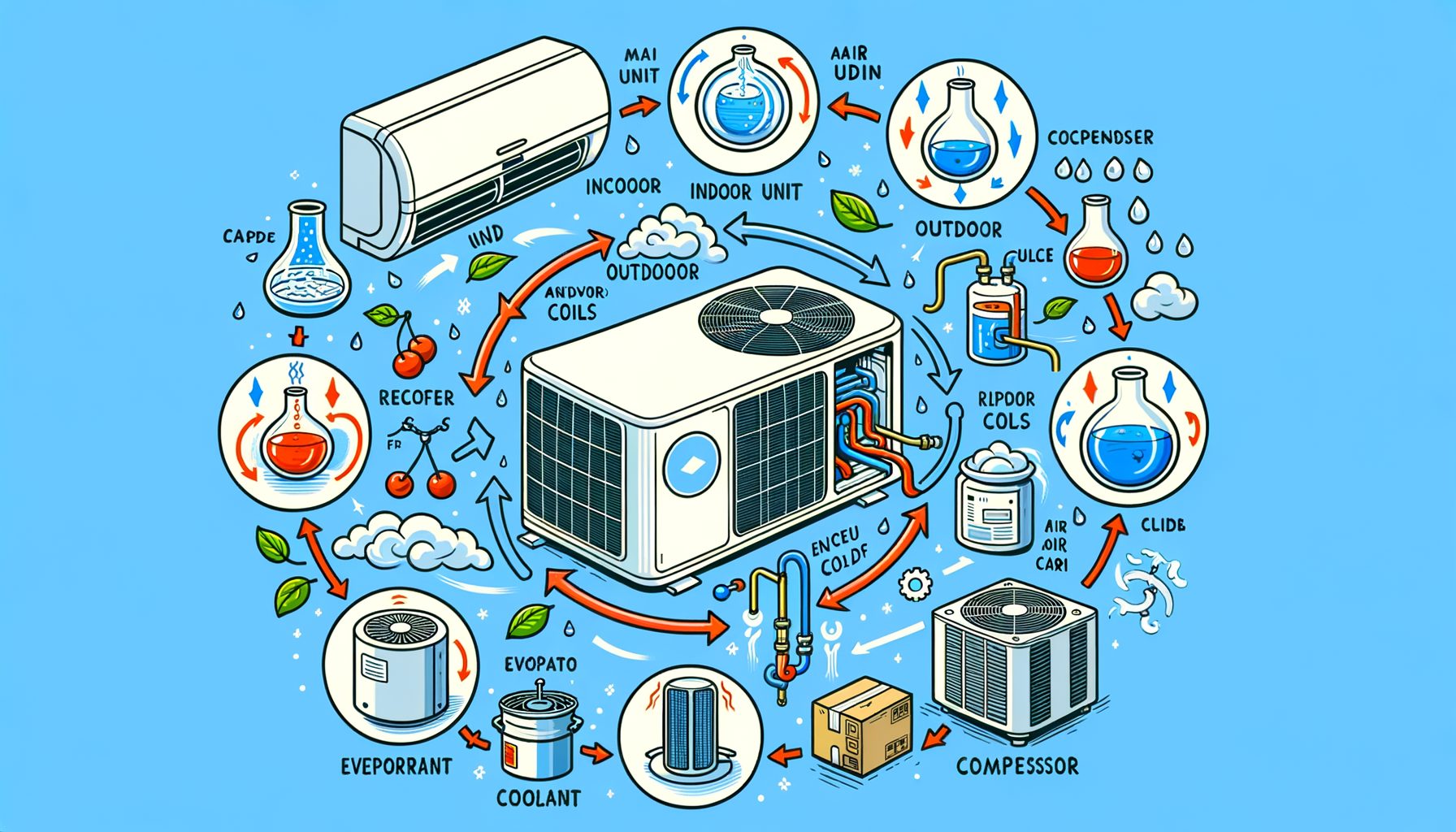
Staying cool ought to be simple, yet plenty of people still wonder how an air conditioner works, why it gets noisy, or what to do when bills spike on sweltering days. The good news is straightforward: learn the basics and you can choose better equipment, run it more efficiently, and fix small problems before they balloon into costly repairs. Consider this your beginner-friendly guide—it demystifies the AC process with clear explanations, practical examples, and tips you can use today. By the end, you’ll read specs with confidence, spot issues early, and make smart decisions that keep your space comfortable without burning through cash.
The Refrigeration Cycle, Explained Simply
If you’ve ever felt cold air coming from a vent and wondered where the cold actually comes from, look to a loop called the refrigeration cycle. Cold isn’t created; heat is moved from inside your room to the outdoors. Understanding how an air conditioner works centers on four stages—compression, condensation, expansion, and evaporation—running in a precise loop, again and again.
First comes the compressor in the outdoor unit, which squeezes the refrigerant gas, driving up pressure and temperature. Think of a bicycle pump—compression makes things hot. That hot, high-pressure refrigerant then enters the condenser coil outside. As a fan blows outdoor air across the coil, heat is released to the surroundings and the refrigerant condenses into a liquid. Warm air blowing out of the outdoor unit during this step is normal; it’s your home’s heat being dumped outside.
Next, an expansion device—often a thermal expansion valve or capillary tube—drops the refrigerant’s pressure dramatically. With the pressure down, the temperature plummets as well. What you have now is a cold, low-pressure liquid ready to soak up heat.
That chilled liquid flows to the indoor evaporator coil. Warm room air passes over the coil, the refrigerant absorbs that heat, and it evaporates back into a gas. The supply air returns cooler and drier, since moisture is also removed—hence the dehumidifying effect. The refrigerant gas heads back to the compressor, and the loop continues.
In practice, the cycle is managed by sensors, thermostats, and—in modern systems—inverter technology that varies compressor speed. Such smooth control trims energy use and steadies temperatures. The big takeaway: your AC is a heat-mover. Once you see it that way, symptoms like frosted coils, weak airflow, or soaring power draw make far more sense—and you’ll know where to start.
Inside Your Unit: The Parts and Airflow Path
For the refrigeration cycle to do its job, several components must work in concert—and airflow is the unsung hero. Inside, you’ll find the evaporator coil, a blower fan, an air filter, and a condensate drain. Outside sit the compressor, the condenser coil, and a fan. A thermostat or smart controller orchestrates the system, signaling when to ramp up or slow down to meet your setpoint.
Here’s the airflow path. Room air is drawn through a return grille, passes a filter that snags dust, hair, and pollen, then moves across the cold evaporator coil where heat and moisture are removed. The blower sends that conditioned air back out through supply vents. Meanwhile, the outdoor unit pushes ambient air across the hot condenser coil to expel your indoor heat to the world. Block any part of that airflow—clogged filter, dirty coils, closed vents—and the system works harder, costs more, and cools less.
Expect to see several formats: window units, portable units, split systems (common in homes), ducted central systems, and ductless mini-splits. Ductless gear avoids long duct runs that can leak and waste energy by placing small indoor heads directly in rooms. Modern inverter mini-splits modulate speed, run quieter, and deliver impressive efficiency—ideal for apartments, home offices, and retrofits.
Two more items matter for reliability: the condensate drain (or pump) and sensors. When humid air meets a cold evaporator, water forms and must be carried away. If the drain is blocked, leaks or safety shutoffs can follow. Sensors watch coil temperature, refrigerant pressure, and room conditions to prevent freezing or overheating. Should the indoor coil ice up, airflow problems (dirty filters) or a low-refrigerant leak are common culprits. In short, balance the airflow and keep components clean to keep everything humming—and knowing the air’s path helps you pinpoint issues fast.
Efficiency, Sizing, and Energy Savings
Comfort is great—until it crushes your power bill. Efficiency begins with choosing the right size and understanding ratings. Oversized systems short-cycle, wasting energy and doing a poor job of dehumidifying. Undersized units run continuously yet still can’t keep up. A rough rule of thumb for moderate climates is 20–30 BTU per square foot (215–323 W/m²), but a professional load calculation (Manual J) is better, factoring in insulation, sun, windows, occupancy, and climate. If you can, ask for a load calculation before you buy.
Efficiency metrics vary by region. Many countries use seasonal ratings such as SEER or SEER2 to reflect average performance across temperatures. EER rates efficiency at a single test condition. COP (coefficient of performance) is common worldwide and applies to heat pumps as well. As a rule, higher numbers signal better efficiency.
Here’s a quick reference:
| Metric | What it Means | Typical Numbers | Why It Matters |
|---|---|---|---|
| SEER / SEER2 | Seasonal cooling efficiency | 14–25+ (higher is better) | Lower seasonal energy bills; eligibility for rebates |
| EER | Fixed-condition efficiency | 9–14+ | Useful in consistently hot climates |
| COP | Output divided by input | 3.0–5.0+ (for efficient systems) | Global, easy-to-compare metric |
Practical savings tips include sealing leaks, shading west-facing windows, using blinds, keeping filters clean, and nudging the thermostat higher (24–26°C / 75–78°F). Smart thermostats and inverter mini-splits optimize runtime. Programs like ENERGY STAR report that upgrading from older equipment to high-efficiency models can cut cooling costs by roughly 10–30%, depending on climate and habits.
One more factor: refrigerants. Many regions are transitioning away from high-GWP (global warming potential) options toward lower-GWP blends. Proper installation and leak testing are essential—for performance and for the planet. Ask your installer about refrigerant type and recovery practices, and check your utility or energy authority for incentives.
Maintenance and Quick Troubleshooting
You don’t need to be a technician to keep your AC healthy. A handful of simple habits prevent most comfort and cost problems. Start with the air filter: check monthly during heavy use and replace or wash it per the manufacturer’s schedule. A dirty filter chokes airflow, forcing longer run times and higher bills. Next, keep both coils clean. Power off, gently vacuum the indoor coil area, and clear debris around the outdoor unit. Maintain 60–90 cm (2–3 feet) of clearance around the condenser so it can breathe.
Give the thermostat a quick once-over: confirm “cool” mode, fan set to “auto,” and verify any schedules or app settings. If the system runs but the room stays warm, step outside—air blowing from the condenser should feel warm; if not, heat may not be rejected properly. Also check the condensate drain; pooled water or a tripping safety switch points to a clog. A wet/dry vacuum at the drain outlet often does the trick.
Watch for deeper issues: ice on the indoor coil, hissing, or short cycling. Ice usually indicates low airflow (dirty filter, closed vents) or low refrigerant. Suspect a refrigerant leak? Call a certified technician; regulations and specialized tools apply. Electrical odors or tripped breakers also warrant professional help. For ducted systems, hunt for duct leaks—large room-to-room temperature swings or failing old cloth duct tape can waste plenty of cooling.
A seasonal pro tune-up pays off. Technicians check refrigerant pressures, clean coils, verify superheat and subcooling, test capacitors, and confirm safe operation. If your unit is 10–15 years old, weigh repair costs against a high-efficiency replacement; rebates or tax credits may tip the balance. For best-practice guidance, see resources from the ASHRAE community and your local energy agency.
Conclusion: From Confusion to Control—Your Next Steps
You’ve just seen how an air conditioner works, why airflow and refrigerant matter, how components connect, and how to choose and maintain equipment for efficient comfort. The core idea is simple: ACs move heat. The compressor boosts refrigerant pressure, the outdoor coil rejects heat, the expansion device drops the temperature, and the indoor coil absorbs heat and moisture from your room. With that mental map, common problems get easier to spot and fix: change filters, keep coils clean, clear the drain, and pay attention to odd noises or icing.
Planning a purchase? Get the size right and consider inverter-driven systems with strong efficiency ratings. Look for independent labels like ENERGY STAR and ask for a load calculation, not a square-footage guess. For ongoing savings, set reasonable temperatures, use shades, seal leaks, and consider a smart thermostat. And when you need help, hire certified pros who follow current refrigerant and safety standards. For deeper learning, the U.S. Department of Energy and EPA SNAP pages offer reliable, up-to-date guidance.
Now, take one action today: check your filter, clear space around your outdoor unit, or tweak your thermostat by one degree. You don’t have to be an engineer to have a cool, efficient home—you just need the basics and a plan. Ready to take control of your comfort? Start with a quick inspection, jot down any issues, and set a reminder for monthly checks. The best time to optimize your AC is before the next heatwave hits. What’s the first improvement you’ll make today?
Quick Q&A
Q: Is it normal for water to drip from my indoor unit?
A: Yes. ACs remove moisture from the air, and that water is meant to drain through a condensate line. If you see dripping indoors or a safety switch tripping, the line is likely clogged—clear it or call a technician.
Q: How often should I replace my air filter?
A: Check monthly during peak seasons. Many filters last 1–3 months, but homes with pets, dust, or allergies may need more frequent changes. Washable filters should be cleaned as the manufacturer recommends.
Q: What thermostat setting saves the most energy?
A: Set the temperature as high as you comfortably can—often 24–26°C (75–78°F). Use schedules or smart features to raise the setpoint while you’re away and cool the space before you return.
Q: Do I need an inverter (variable-speed) system?
A: Not mandatory, but inverter systems can boost comfort and efficiency by matching output to demand, cutting noise, and reducing short cycling. They shine in homes with varying loads or rooms that need steady temperatures.
Sources and further reading:
U.S. Department of Energy – Heating & Cooling
ENERGY STAR – Efficient Cooling
U.S. EPA – Significant New Alternatives Policy (Refrigerants)
WHO – Indoor Air and Health (context for ventilation and IAQ)